Feeding Horses Pumpkin Has Gotten Complicated With All the Conflicting Advice Flying Around
Can horses eat pumpkin? Yes. That’s the whole answer, honestly. But you’re here, so let’s actually get into it — because standing in your barn in late October with a leftover jack-o-lantern or a fresh pie pumpkin from the farmer’s market deserves a better answer than a one-liner.
Same question, every October: “Is this safe?” The answer is simple. The prep, though — that part trips people up more than any article I’ve read actually admits.
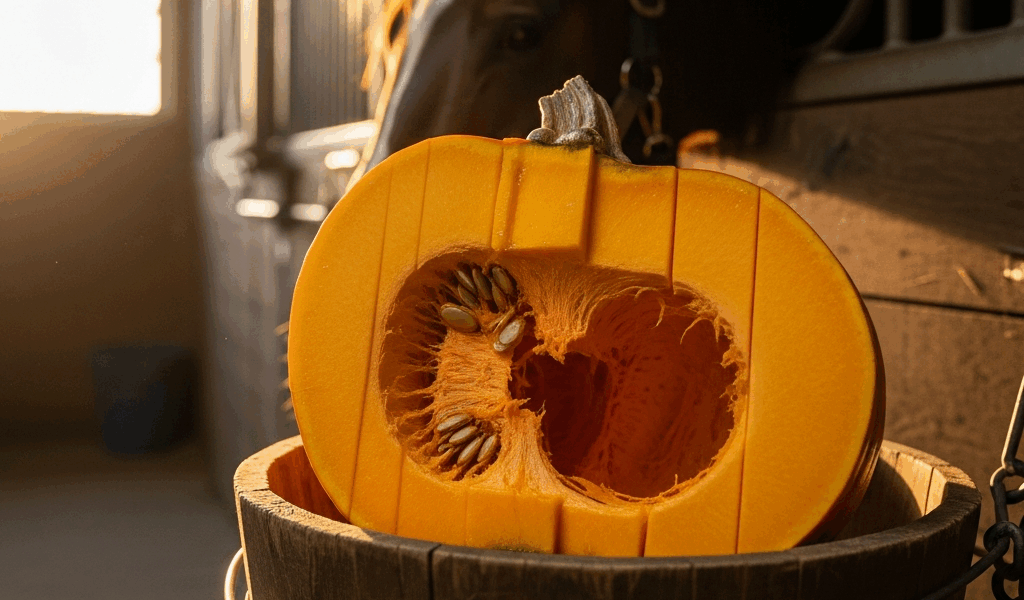
The flesh is safe. The seeds are safe. What you really need to nail down is what to remove and how to cut the thing before it goes anywhere near your horse’s mouth.
The Pumpkin Parts Breakdown
Let’s start with what’s actually edible. Pumpkin flesh is mostly water and fiber — two things a horse’s digestive system handles without complaint. I’ve watched my Thoroughbred, Mercy, go after chunks of pumpkin with more enthusiasm than she shows for pretty much any other treat. She’s weirdly passionate about it.
Seeds are fine too. No choking risk, no digestive drama. Some people rave about their nutritional profile. Honestly, the whole pumpkin is mild enough nutritionally that seeds don’t really move the needle either way.
The stem, though? Off. Always. It’s woody, it resists breaking down in the mouth, and it’s exactly the kind of thing that catches in a horse’s throat when they try to swallow a chunk too fast. I learned my lesson about rigid plant material with a carrot — not a pumpkin — and it scared me badly enough that stem removal is now non-negotiable for me. Ten seconds of work. Do it.
The rind is debatable. Technically safe, but tough and fibrous. I split the difference — thick rinds come off, thin skins on smaller pumpkins stay on. There’s no single right call here. It depends entirely on your horse’s chewing ability and how well you know their habits.
How Much Pumpkin Is Actually Safe
Probably should have opened with this section, honestly. Quantity is where I see owners go wrong more than anywhere else.
The standard equine nutrition guideline is the 1% rule: treats shouldn’t exceed 1% of your horse’s daily diet by weight. For a 1,000-pound horse, that’s roughly 10 pounds of treats maximum per day. In practice? I don’t go anywhere near that with pumpkin. A few cups per serving is more realistic — and safer.
Pumpkin is high in moisture and low in caloric density. Feed too much and you’re crowding out the forage they actually need. You’re also rolling the dice on digestive upset — gas, loose stool, and in worst-case situations, colic. Not worth it for a seasonal treat.
Here’s what I actually do: 2 to 3 cups of cut pumpkin pieces, maybe three or four times a week. That’s roughly 1 to 1.5 pounds per serving. A treat, not a meal component. At that volume, I’ve never seen any issues across any of my horses.
First time your horse is eating pumpkin, start small — a small handful, maybe half a cup. Wait a day or two. Increase gradually. This protects the hindgut and gives you a window to catch any individual sensitivity. Rare, but it happens.
Pregnant mares, foals, and horses with existing digestive trouble deserve extra caution. I wouldn’t cut pumpkin out entirely for these horses, but smaller portions and a slower introduction timeline are non-negotiable. Don’t make my mistake of assuming “natural food” automatically means “no risk.”
Cutting Technique Matters More Than You’d Think
Choking in horses is not common. It is, however, serious. And prevention comes entirely down to how you prep the food before it touches their lips.
Never hand a whole pumpkin to a horse. Not even close to whole. Cut pieces no larger than 2 to 3 inches across — smaller is honestly better. I use a standard 8-inch chef’s knife, quarter the pumpkin first, then cut each quarter into chunks. Pie pumpkins I sometimes cut into eighths. The goal is a piece your horse can chew properly without attempting to swallow it in one go.
Stem off first. Seeds out if you want — though you don’t have to. Then cut. That sequence takes maybe two extra minutes and eliminates the main hazard entirely.
One thing worth mentioning: pumpkin puree is not a safe swap for chunks. It gets gluey, and that consistency can build up in a horse’s mouth or throat in ways that chunks simply don’t. Stick with pieces you’ve cut yourself.
Can You Give Your Horse the Jack-o-Lantern?
October hits, decorative pumpkins are everywhere, and suddenly every barn owner is wondering whether to just hand the carved Halloween pumpkin to the horses. Technically yes. But there are real conditions attached.
Decorative pumpkins aren’t the same as cooking pumpkins. They’re bred for looks, not digestibility. They’re also frequently treated — waxy shelf-life coatings, anti-fungal dips, pesticide residue. None of that belongs in a horse’s mouth.
So can you give your horse the jack-o-lantern? Only if it clears every item on this list:
- No wax coating. Run your hand over the surface. If it feels slick or shiny beyond normal pumpkin skin, it’s been treated. Pass on it.
- No mold or soft spots. Carved pumpkins rot fast. Check every surface carefully — if you’re uncertain about any area, don’t offer it.
- No paint. Sounds obvious. Someone has still overlooked it and regretted it. Check anyway.
- No candle residue. If you burned a candle inside, scrape out any wax from the interior walls. Small amounts cause GI problems. It’s worth the extra sixty seconds.
- Stem removed. Obviously.
Undecorated, uncarved pumpkins — the kind sitting in a produce section — are what I actually feed my horses. Those are safe. The porch gourd that sat outside for three weeks? I’m skipping that entirely.
I’m apparently someone who once handed a carved jack-o-lantern to my gelding without checking for candle wax residue, and he was fine, but I felt like an absolute idiot afterward. Now I visually inspect and physically run my fingers along the interior before offering anything that’s been carved. Don’t make my mistake.
When Pumpkin Is Actually Useful Beyond Being a Treat
But what is pumpkin, functionally, beyond a seasonal snack? In essence, it’s a high-moisture, fiber-rich food with mild nutritional impact. But it’s much more than that for some horses — particularly those with sluggish digestive transit. The fiber has been used anecdotally to support gut motility, not as a veterinary substitute, but as a supplemental approach some owners swear by. That’s what makes pumpkin endearing to us horse people — it’s practical and simple at the same time. If your horse has chronic digestive slowness, asking your vet about pumpkin is a reasonable conversation to have. Just don’t assume it’s a cure. It isn’t.
Horses That Should Skip the Pumpkin
Not every horse gets a pass on this one. A few specific situations where you need to pump the brakes.
Horses with HYPP
Hyperkalemic Periodic Paralysis — common in certain Quarter Horse bloodlines — affects how the body regulates potassium. Pumpkin isn’t alarmingly high in potassium compared to many other foods, but owners managing HYPP horses control every dietary variable carefully. Check with your vet before introducing anything new if your horse has this diagnosis.
Insulin-Resistant or Metabolically Challenged Horses
Pumpkin is relatively low in sugar. That’s the good news. But low isn’t zero. I’m apparently someone with a friend whose borderline-IR Warmblood tolerated pumpkin in small amounts with vet approval — while another horse of the same breed couldn’t handle it at all without metabolic stress. Individual variation is real. Know your horse’s specifics before you go offering October treats.
History of Colic
Horses prone to colic should approach any new food cautiously. Pumpkin isn’t inherently dangerous for these horses, but introducing unnecessary variables is a gamble I wouldn’t take. Ten minutes of vet consultation costs nothing compared to a $2,000 emergency colic call. Make the call first.
Severe Chewing Issues
Older horses with dental disease or horses post-dental work need appropriately soft food. Pumpkin can still work — cut into half-inch pieces, offered fresh and soft. I had a senior mare with significant dental wear who got her pumpkin exactly this way for two full seasons. She managed fine. The key is adjusting preparation to match the horse’s actual ability to chew, not the average horse’s ability.
The Bottom Line
Horses can eat pumpkin. It’s safe, most horses genuinely enjoy it, and it’s a nice thing to offer when the season rolls around. Remove the stem. Cut pieces to 2 to 3 inches or smaller. Keep portions to a few cups per serving. Introduce it gradually if it’s new. Avoid anything wax-coated, painted, moldy, or full of candle residue. That’s the whole protocol.
I’m genuinely glad the answer here is a yes, because my horses treat pumpkin season like an event. Mercy starts sniffing around the barn in October like she knows something’s coming. For a food that’s roughly 90% water, it gets an unreasonable amount of enthusiasm. That enthusiasm is exactly why it works — it’s novel, it’s seasonal, and when you prep it properly, there is zero downside. So, without further ado, go enjoy the season with your horses.


Leave a Reply