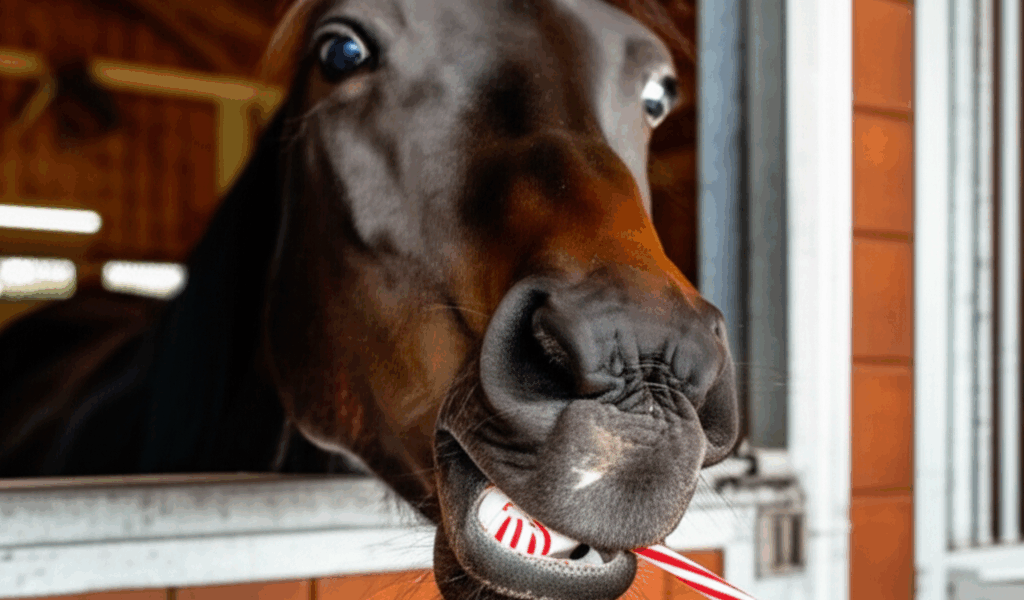
Most healthy adult horses can have an occasional plain peppermint candy, but peppermints are sugary treats—not digestive supplements or a necessary part of the diet. Penn State Extension lists peppermints as an acceptable horse treat in moderation and advises avoiding high-sugar treats for horses or ponies with metabolic issues such as laminitis.
There is no research-backed universal “peppermints per day” maximum. The safe choice depends on the horse’s size, total ration, body condition, dental health, swallowing behavior and metabolic history. Ignore online claims that precisely prescribe 10–15 per day or 1–2 per week as veterinary limits; neither figure is an established standard.
Peppermints for horses: quick answer
| Question | Practical answer |
|---|---|
| Can a healthy horse eat a peppermint? | A plain peppermint can be an occasional small treat |
| How many are safe? | No universal evidence-based number exists; keep portions small and infrequent |
| Which horses need extra caution? | Horses with insulin dysregulation, EMS, PPID-related diet restrictions, obesity, laminitis risk, dental disease or prior choke |
| Can peppermint candy treat colic or gas? | No; candy is not a veterinary treatment |
| What if the horse ate a bag or wrappers? | Call the veterinarian promptly for case-specific advice |
How much peppermint can a horse have?
No equine authority identified in this review publishes a candy count that is safe for every horse. Penn State’s guidance is to feed peppermints in moderation and keep treats from becoming a major part of the diet. For a healthy adult horse with no diet restriction, one small plain mint on an occasional training or handling day is a conservative starting point—not a medical ceiling or permission to feed it daily.
Count all extras together. Peppermints, apples, carrots, commercial treats and sugary feed toppers do not become nutritionally invisible because each comes from a different person. Barns should decide who is allowed to feed treats and keep a simple rule so visitors do not unknowingly multiply the amount.
Which horses should avoid sugary candy?
Ask the veterinarian or equine nutritionist before offering peppermints to a horse with:
- equine metabolic syndrome or diagnosed insulin dysregulation;
- current or previous laminitis;
- pituitary pars intermedia dysfunction (PPID) with dietary restrictions;
- obesity or a prescribed weight-loss ration;
- poor dentition, difficulty chewing or a prior episode of choke;
- a medically controlled diet or unexplained digestive signs.
UC Davis explains that horses with equine metabolic syndrome have abnormal insulin responses and increased laminitis risk, particularly with high-carbohydrate feeds. Treat decisions should fit the veterinarian’s complete dietary plan rather than a generic internet serving size.
Peppermint candy is not a digestive remedy
The previous article claimed peppermint candy could settle an upset stomach, reduce gas and stimulate appetite. A flavored sugar candy is not equivalent to a veterinary peppermint preparation, and it should never be used to treat colic, poor appetite or abdominal discomfort.
Call a veterinarian for signs such as pawing, flank watching, repeated lying down or rolling, sweating, reduced manure, refusing feed, difficulty swallowing, coughing while eating, or feed/saliva coming from the nostrils. Do not walk a horse indefinitely, force water, administer oil or give more treats unless the veterinarian directs it.
Choke and safe treat handling
In horses, “choke” means food obstructs the esophagus. Penn State notes that large pieces and poorly chewed treats increase risk, especially in older horses with declining teeth. Peppermints are small, but a horse that bolts treats, has dental problems or has choked before still needs an individualized plan.
- Remove every wrapper before approaching the horse.
- Offer only from a safe position and supervise swallowing.
- Do not encourage grabbing, mugging or biting behavior.
- Do not crush hard candy into sharp fragments based on online advice.
- For a horse with chewing or swallowing concerns, skip candy and ask the veterinarian about an appropriate alternative.
Check the ingredient label
Choose only a simple product whose ingredients you understand. “Sugar-free,” chocolate-covered, medicated, caffeinated or multi-ingredient breath products are not interchangeable with a plain peppermint. This guide does not label every sweetener or flavoring safe or toxic for horses because equine evidence and formulations differ.
If the horse ate a large or unknown amount, unusual ingredients, packaging, or a product containing medication, contact the veterinarian or an animal poison service with the exact package and estimated quantity. Do not wait for a generic symptom timetable from a website.
Better treat choices
For many healthy horses, small pieces of an approved fruit or vegetable or a commercial equine treat fed according to its label may be easier to portion. Penn State lists several produce options and stresses cutting larger foods to reduce choke risk. Horses on metabolic diets may need low-nonstructural-carbohydrate options selected by their veterinarian or nutritionist.
Sometimes the safest reward is part of the horse’s ordinary ration: a few hay pellets or another item already approved in the diet. See our horse treat selection guide and daily horse diet basics, then defer to the individual feeding plan.
Using treats in training
Food can reinforce desired behavior, but poor delivery can teach crowding or nipping. Keep the horse out of your personal space, reward a specific behavior, and stop if the horse becomes pushy. A qualified trainer can help establish safe food-reward mechanics.
Do not rely on the sound of a candy wrapper to control a loose or agitated horse. Consistent handling, forage, turnout, appropriate training and veterinary care matter far more than the treat itself.
What to do after accidental overconsumption
- Remove access to the remaining candy and packaging.
- Save the ingredient label and estimate how much and when it was eaten.
- Call the veterinarian, especially for a metabolic horse, a large/unknown amount, wrappers or unusual ingredients.
- Follow the veterinarian’s feeding, monitoring and movement instructions.
- Seek urgent help for colic, choke, breathing difficulty, marked depression, diarrhea, lameness or refusal to eat/drink.
Frequently asked questions
Are peppermints toxic to horses?
Plain peppermint candy is listed by Penn State Extension as an acceptable treat in moderation. That does not make every mint-flavored or sugar-free product appropriate.
Can horses eat peppermints every day?
There is no nutritional need to do so and no universal daily candy allowance. Keep sugary treats occasional and small, and follow the horse’s veterinary diet plan.
Are peppermints safe for a laminitis-prone horse?
Do not assume they are. Penn State advises potentially avoiding sugary treats for horses and ponies with metabolic issues, and UC Davis links insulin dysregulation with increased laminitis risk.
Can peppermint cure an upset stomach in a horse?
No. Peppermint candy is not a colic or digestive treatment. Contact a veterinarian for appetite changes or abdominal discomfort.
What is a safer training reward?
Use a tiny portion of something already approved in the horse’s ration or a veterinarian-approved low-sugar treat, delivered with safe training mechanics.
Veterinary and extension references
- Penn State Extension: giving horses treats, sugar and choke
- UC Davis Center for Equine Health: equine metabolic syndrome
Veterinary information reviewed August 2026. This guide is educational and does not replace advice from the veterinarian who knows the horse.



Leave a Reply