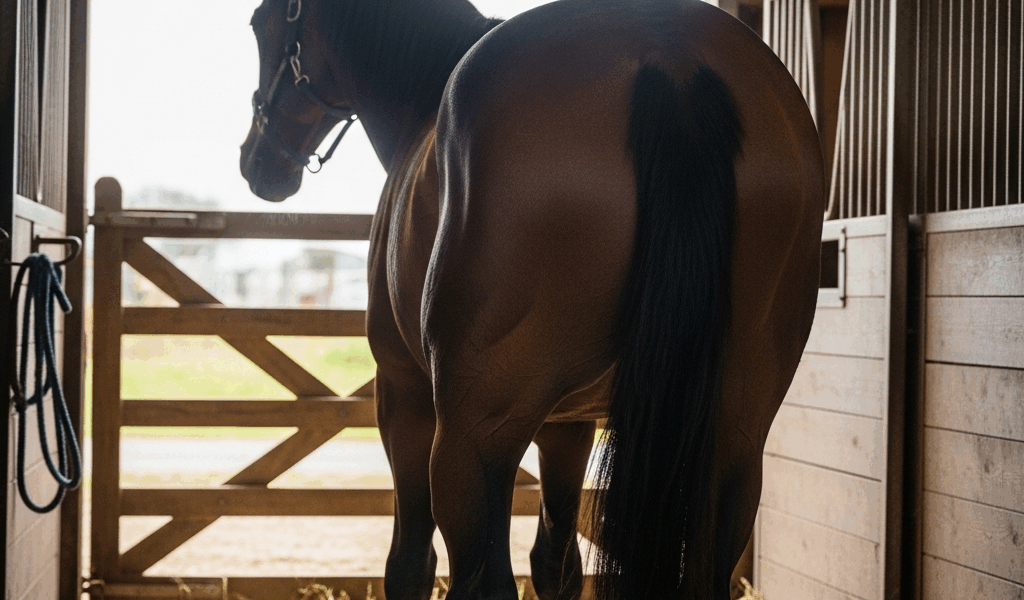
Why Horses Back Away From Handlers
A horse that keeps backing away from you is communicating something specific. I learned this the hard way after spending two months trying to “correct” my gelding’s backing behavior with a lunge whip and frustration—turns out he had a rotated coffin bone. Most guides will tell you backing means disrespect or dominance, but that’s exactly backward thinking that makes the problem worse.
Before you train anything, you have to diagnose. The backing behavior itself is just the symptom.
Here are the root causes I’ve seen repeatedly:
- Fear or startle response. He backs because you’re moving too quickly, invading his space, or you smell like something unfamiliar. This is the most common cause with younger horses or those with a history of rough handling. If your horse backs only when you approach suddenly, or only during certain situations like grooming, fear is almost certainly at play.
- Pain in the feet, back, or mouth. A horse with hoof soreness, dental problems, or saddle fit issues will back away to avoid the discomfort of forward movement or pressure. If the backing started suddenly, or if he backs away only during specific activities (grooming the back, mounting, tacking up), pain is your first suspect. I cannot overstate this—I’ve seen owners spend months on “desensitization” when the horse just needed a farrier visit.
- Learned avoidance from previous handling. If he was jerked, hit, or pressured roughly in the past, backing becomes a defensive strategy. He’s learned that moving backward gets him away from the pressure faster than standing still. This often pairs with wide eyes and pinned ears.
- Space invasion without warning. Some horses will back if you approach their face directly without letting them see you coming. Others back if you corner them without an exit route. This isn’t disrespect—it’s survival instinct.
- Confusion over conflicting cues. If you’re holding tension in the lead rope while trying to encourage forward movement, or if your body language says “stop” while your voice says “come,” he’ll often back to reduce the confusing pressure. I did this accidentally for weeks before realizing my shoulders were turned sideways—a defensive posture.
Probably should have opened with this section, honestly: the diagnosis step saves you months of wasted effort. Spend a few days just observing. When exactly does he back? During grooming? When you approach with the halter? Under saddle? In a specific location? Write it down.
How to Tell If It’s Fear vs. Disrespect
Body language is the horse’s native language. Learning to read it means the difference between a fix that works and a “fix” that deepens the problem.
If his ears are pinned flat back against his head, his eyes are wide or showing the whites, his tail is tucked, and his whole body feels stiff or tense—you’re seeing fear or anxiety. His muscles are literally locked. Punishment or aggressive correction at this moment will cement the backing behavior. You’d be teaching him that your presence means bad things are coming, so backing away becomes the safest choice.
True disrespect (rare, and often confused with fear) shows different signs: ears might be pointed at you with less tension, the horse might back while looking calm, or he might back and then immediately nose-nudge you or try to move forward again. This horse is testing boundaries, not fleeing from danger. But honestly, I’ve only seen genuine disrespect-based backing a handful of times in twenty years. Fear and pain account for roughly 90% of backing cases.
Here’s why the distinction matters operationally: if it’s fear, your job is to prove through repetition and consistency that your approach is safe. If it’s pain, your job is to find the source and fix it. If it’s learned avoidance, your job is to offer a better choice through patient groundwork. These require completely different approaches. Using punishment on a fearful horse makes him worse. Using desensitization on an undiagnosed hoof abscess wastes six weeks and keeps him in pain.
Step-by-Step Desensitization to Stop Backing
Once you’ve ruled out pain and identified fear or learned avoidance as the root cause, desensitization works—but only if you follow the progression. Skipping steps is why most people fail.
Step 1: Work at a distance where he stays still. Don’t approach yet. Stand 20 to 30 feet away from your horse in the pasture or a round pen. If he backs when you’re even that far out, this tells you something important about the intensity of his fear. Just stand there. Use a carrot stick or a toy—something interesting—and occasionally toss treats toward him. The goal is for him to associate your presence with good things, not pressure. Spend three to five days here, maybe longer if his backing was severe.
Step 2: Begin the slow approach with pause points. Now you’ll move toward him, but you’ll pause every two or three steps. Watch his body. The second his ears perk forward even slightly, or his tail relaxes, or he stops backing—pause. Do not move closer. Let him reset. I usually hold a pause for thirty seconds to two minutes. Then move one more small step. If he backs, you’ve gone too fast. Step back to where he was comfortable and start again. This teaches his nervous system that moving toward you doesn’t always mean pressure is coming.
Step 3: Reward stillness, not forward movement. This is where most people mess up. They think the goal is to get the horse to move toward them, so they keep applying pressure. Actually, the first goal is teaching him that standing still while you approach is a choice that gets rewarded. When he holds ground for five seconds, step back and reward with a treat or a scratch. This seems backward, but it works. You’re building confidence, not forcing obedience.
Step 4: Add handling at each distance level. Once he’ll let you stand beside him without backing at, say, ten feet away, start doing groundwork at that distance. Groom his neck. Run your hand down his leg. Work with his halter. Only when he’s completely relaxed at this distance do you move closer and repeat. This typically takes days per distance level, sometimes weeks depending on how deep the fear runs.
Step 5: Introduce the actual trigger slowly. If he backs away specifically when you pick up his feet, approach his feet from different angles at first without picking them up. Let him feel your hands near his legs while he’s calm. Then one day, gently lift a foot for one second, put it down, reward. Build from there. Real-world timeline: two weeks minimum for mild cases. Three to eight weeks for horses with serious past trauma. Not hours. Not days.
When to Call Your Vet or Trainer
Stop the desensitization work immediately if you notice any of these red flags:
- Sudden behavior change. If your horse was fine for months and suddenly started backing, something changed. Pain, illness, or a scary experience are the usual suspects. Get a vet out before you do any training work.
- Backing paired with lameness, head shaking, or reluctance to eat. These are pain signals. A physical exam is non-negotiable.
- Backing only happens under saddle or during specific handling. This is almost always pain-related—saddle fit, back soreness, or dental issues. A trainer can’t fix pain with behavior modification.
- Backing combined with aggressive behavior like pinning ears + snapping or kicking. This horse needs professional assessment. He might be in pain, or the fear level might be past what a ground handler should manage alone.
- The backing is getting worse instead of better after two weeks of consistent desensitization. You might be missing something about the root cause, or the underlying issue might be more serious than it appeared.
There’s no shame in calling a professional. A competent trainer or equine behaviorist can diagnose in one session what might take you weeks of guesswork. Same goes for vets—a lameness exam costs less than eight weeks of wasted training.
Quick Safety Tip for You
When you’re working through desensitization, never let a backing horse trap you against a fence or wall. Always position yourself with an exit route behind you. If he backs hard, you step back, not forward. Keep your body angled so you’re not directly in his path. This sounds obvious, but I’ve seen handlers get knocked over or pinned because they stood their ground in a small space. You’re not teaching submission by holding ground—you’re teaching fear. Move with him, maintain your space, and stay safe.


Leave a Reply