Why Horses Rub Their Mane and Tail
Mane and tail rubbing has gotten complicated with all the conflicting advice flying around.
The honest answer? There’s no single culprit. Five main reasons cause rubbing — and most horse owners bolt straight to parasites without checking the others first. Sometimes that’s right. Often it’s a waste of time and money.
Here’s what we’re covering: insect-driven itch, fungal and bacterial skin conditions, nutritional gaps, tack problems, and allergic responses. So, without further ado, let’s dive in.
Start Here — Rule Out the Most Common Culprits First
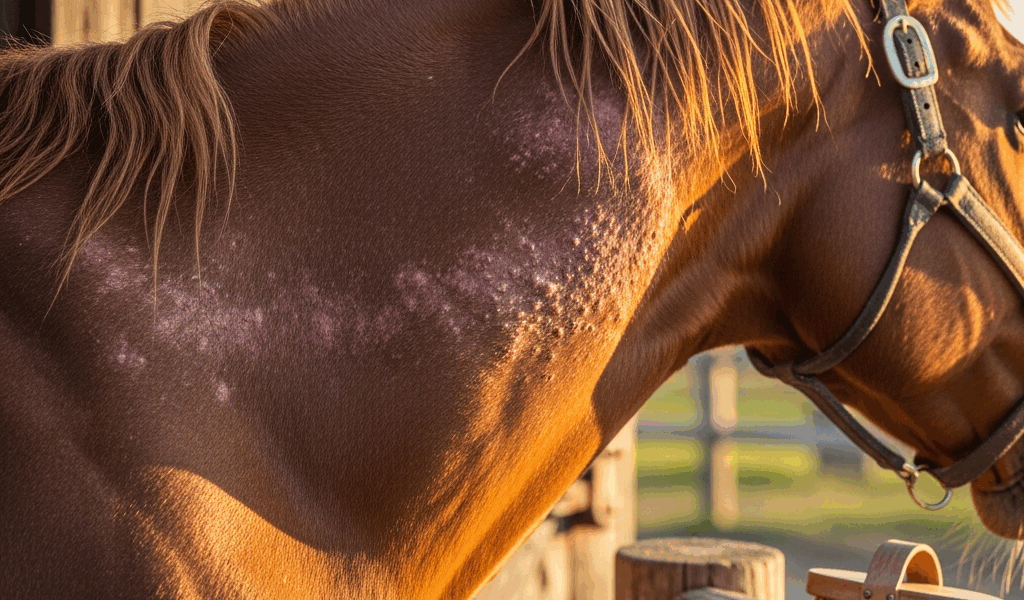
But what is sweet itch? In essence, it’s an allergic reaction triggered by Culicoides midge bites. But it’s much more than that — it’s probably the single most misdiagnosed condition in the horse world, and I say that from personal experience.
Probably should have opened with this section, honestly. It’s what I should have diagnosed months before I did instead of cycling through five different supplements and two vet visits that went nowhere.
Here’s what sweet itch actually looks like: broken tail hairs that snap short rather than fall out cleanly, thickened darkened skin at the tail base, and sometimes an angry rash along the mane crest. Worse at dawn and dusk. Better indoors or when wind picks up. The Culicoides midge — tiny, barely visible — is active specifically during those low-light hours. Watch your horse for one week. Itching that spikes at sunrise and sunset, then settles midday, points squarely at sweet itch.
What to do immediately:
- Get a quality fly sheet built for sweet itch protection. Horseware and Shires both make fine-mesh versions that actually block midges. Budget $120–$180 — cheaper sheets let midges through.
- Apply insect repellent twice daily during peak hours. I’m apparently sensitive to pyrethrin-based sprays myself, but Absorbine UltraShield works well on my horses while generic fly sprays never seem to do much.
- Use a barrier cream — zinc oxide or petroleum-based — along the mane crest and tail base at dusk. A $4 tube of generic zinc oxide from the pharmacy works fine.
- Move your horse away from standing water and wet ground. That’s where Culicoides breed. Even a 200-foot distance from a stock pond makes a real difference.
Don’t forget pinworms. Overlooked constantly. They cause tail-base itching specifically — more tail rubbing than mane rubbing, which is actually a useful distinction. Transmitted through contaminated grooming tools and shared bedding. A fecal test confirms them. A single dose of pyrantel pamoate resolves them. Ask your vet for the right dosage by weight. Don’t make my mistake of treating for sweet itch for six weeks when a $15 fecal test would have caught pinworms on day one.
Skin and Coat Issues That Cause Rubbing
Rain rot, fungal infections, seborrheic dermatitis. That’s the second wave. That’s what makes this category tricky for us horse owners — these conditions look superficially similar to sweet itch but require completely different treatment.
Crusty lesions, matted hair clumping together, flaky buildup along the mane crest and tail head. The skin underneath feels thick, sometimes greasy. Rain rot has a distinctive musty smell — once you’ve smelled it, you recognize it immediately. Dandruff-type conditions leave white or gray flaking that brushes off in sheets.
Here’s the at-home check: part the mane hair and look directly at the skin underneath. Healthy skin is pink, smooth, no visible debris. Problem skin is red, bumpy, or crusted. Do the same along the tail head. Take a photo. Compare it to the opposite side of the horse — having a baseline makes it easier to see what’s actually wrong.
Frustrated by persistent fungal cases that wouldn’t budge with regular shampoo, I eventually switched to Equiderma and Malaseb — both run about $25 per bottle. Bathe twice weekly for three weeks. No improvement by week two? Call your vet. Some fungal infections require prescription oral or topical medication that no over-the-counter product can touch.
Minor scaling and dandruff often respond well to omega-3 supplementation and better grooming habits — more on the grooming side of things in the equipment section below.
Check Your Horse’s Feed and Gut Health
This is the section where most articles fall short. Mineral deficiency — specifically zinc, copper, and selenium imbalance — produces itchy, flaky skin that looks identical to a skin disease. Except it isn’t one. That distinction matters enormously because treating it like a skin disease accomplishes nothing.
Hay-only diets are almost always deficient in zinc and copper relative to what horses actually need. Concentrate feeds help, but only if they’re properly balanced — and most aren’t.
Pull your current feed label right now. Find the guaranteed analysis section. Zinc should be around 80–100 mg/kg. Copper should sit at 10–15 mg/kg. If your hay-dependent horse isn’t getting supplemental minerals, you’ve found a likely problem.
A ration balancer might be the best option, as fixing mineral deficiency requires precise ratios rather than guesswork. That is because throwing individual supplements at the problem often creates new imbalances while solving the original one. Nutrena Empower Boost and Purina Enrich Plus both run about $40–$60 per month — concentrated mineral and vitamin premixes that correct deficiencies without loading extra calories onto an easy keeper.
Ground flax or a commercial omega-3 product like SmartPak Omega-3 handles the coat side of things. Dull, persistently itchy coat with no obvious skin lesions? That’s often an omega-3 story.
Hindgut health matters here too. Excess starch fermentation drives systemic inflammation — and that inflammation can show up at the skin. High-grain horses sometimes benefit from reducing concentrates and shifting toward forage-based calories instead.
Tack, Blankets, and Equipment Worth Checking
Mechanical rubbing is simple. Easy to fix. Easy to miss when you’re deep in a parasite rabbit hole.
Run through this checklist today:
- Check blanket fit. A blanket sitting too far back rubs the mane at the withers. One that shifts forward irritates the crest. Standard guideline: two fingers under the chest strap. If you can’t fit them, the fit is wrong.
- Inspect your saddle pad. Compressed, matted padding creates pressure points that make horses squirm and rub. Any pad with uneven thickness or visible flattening needs replacing — a decent wool pad runs around $80–$120 and lasts years longer than synthetic alternatives.
- Look at saddle fit. A saddle that bridges or rocks creates pressure behind the shoulders that horses will try to rub out. A qualified saddle fitter costs $75–$150 for an evaluation. Worth it before buying anything else.
- Examine tail bags and wraps. These trap moisture and breed fungal infection — and create direct mechanical irritation on top of that. Use them sparingly. Never overnight.
- Clean your grooming tools. Dirty brushes and curry combs transmit fungal spores and bacteria from horse to horse, session to session.
Grooming tool hygiene is genuinely, consistently overlooked. Hot soapy water, thorough rinse, air-dry completely — once a week. Replace any brush with damaged bristles or embedded hair. A set of quality brushes from Haas or Sprenger runs $30–$60 per brush. Expensive upfront. Lasting investment.
Your action list for the next 24 hours: Rule out sweet itch and pinworms first. Part the mane and tail and look at the skin directly. Pull your feed label and check mineral numbers. Inspect every blanket and piece of tack for fit and wear. Wash your grooming tools. One week of improvement tells you that you’ve found your answer. No improvement after a week — call your vet with photos of the affected areas already pulled up on your phone.

Leave a Reply