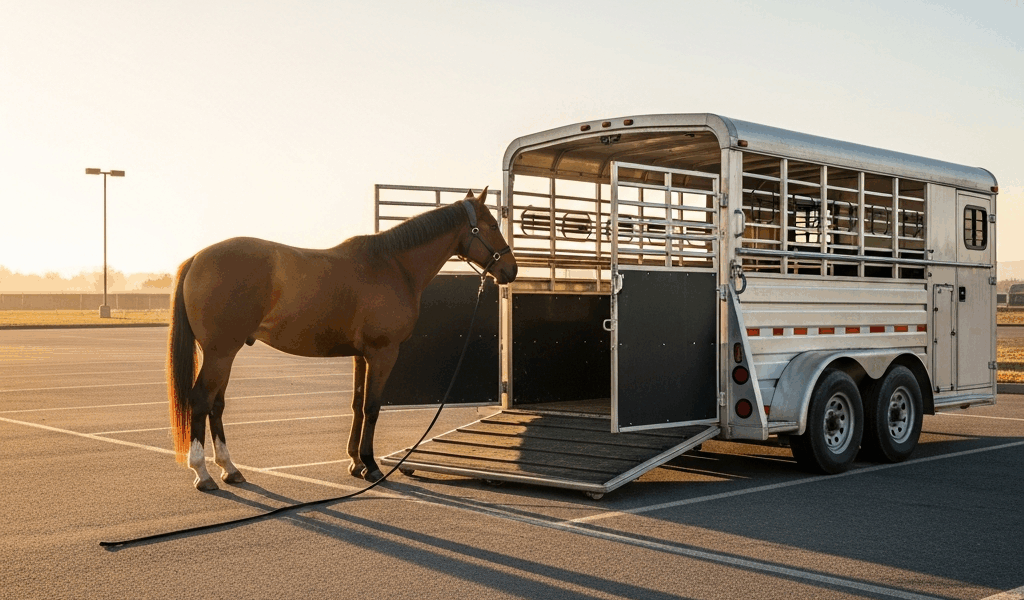
If a horse will not load into a trailer, stop treating the refusal as a contest. First check the horse, the trailer, the surroundings and the handler’s exit route. Then practice in short, calm sessions when there is no deadline. A horse that is rearing, striking, rushing backward or trapping a handler needs an experienced professional—not more pressure from a crowd.
This guide covers ordinary training and safety preparation. It does not replace an evaluation by your veterinarian, a qualified trainer or a trailer professional. If a normally reliable horse suddenly refuses, investigate pain, vision, balance and a recent frightening transport experience before assuming it is a training problem.
Why a Horse May Refuse to Load
Loading asks a horse to enter a confined, often darker space with unfamiliar footing and noise. Refusal can reflect fear, poor preparation, discomfort, learned avoidance or a trailer that is genuinely unsafe. Common contributors include:
- a dark interior, moving partition, sharp edge or distracting object;
- slick, damaged or unstable flooring;
- a ramp or step-up the horse has not learned to negotiate;
- insufficient leading, stopping, backing or yielding skills;
- separation distress or excessive activity around the loading area;
- pain, lameness, poor vision or difficulty balancing;
- a previous fall, rushed unloading or frightening trip; and
- handlers who add conflicting pressure or block the horse’s path.
The reason matters. Repeating the same forceful attempt will not repair a mechanical hazard, pain or panic. Correct the cause before rehearsing the behavior again.
Safety Check Before Loading
Complete the trailer and tow-vehicle inspection before bringing the horse over. Rutgers Extension advises that the trailer be securely hitched to the tow vehicle before a horse is loaded; an unhitched trailer can become unstable. If you are unsure about the floor, hitch, brakes, tires, lights, doors or dividers, have the rig inspected by a qualified professional.
Prepare the trailer
- Park on firm, level ground with generous clearance behind the trailer.
- Hitch correctly and use the required safety chains, breakaway system and electrical connection.
- Inspect the floor beneath removable mats for rot, corrosion or damage.
- Secure doors and partitions so they cannot swing into the horse.
- Remove sharp edges, protrusions and loose equipment.
- Provide sound, manufacturer-appropriate non-slip flooring.
- Open appropriate vents and windows and provide adequate light.
- Set chest bars, butt bars and dividers for the trailer’s design.
- Keep tack, buckets and other trip hazards out of the loading path.
Do not improvise structural repairs, attach loose material to a ramp or cover a defect and call it fixed. A mat, ramp or divider must be secured for its intended use. Our broader horse trailering and transport guide covers vehicle preparation and travel planning.
Prepare the handler and horse
Use a properly fitted halter and a sound lead rope. Wear gloves and sturdy footwear. Never wrap a lead around your hand or body. Do not stand directly behind the horse, kneel on the ramp, crawl beneath a divider or place yourself where the horse blocks your only exit. Rutgers advises having two capable people available for loading and unloading, but that does not mean surrounding or chasing the horse.
The horse should already lead, halt, step back and yield its shoulders and hindquarters calmly in an open area. If those responses are unreliable, establish them away from the trailer first with our horse-leading foundation guide or a qualified trainer.
How to Teach a Horse to Load
Choose a quiet practice day. Do not make the first lesson the morning of a show or veterinary appointment. Work in a securely enclosed area when practical, keep other people and animals out of the path, and decide in advance how the handler will exit.
- Start where the horse can think. Approach only as close as the horse can remain attentive and responsive. Pause before anxiety becomes flight.
- Ask for a small forward response. Use the same light leading cue the horse understands away from the trailer. Avoid a sustained pulling match.
- Release promptly. When the horse looks toward the trailer, shifts forward or takes an appropriate step, soften the cue. Timing teaches more clearly than escalating force.
- Allow inspection. Give the horse time to look and sniff without letting it push into the handler’s space.
- Build one stage at a time. Calmly approaching, touching the ramp, placing one foot, standing halfway and standing fully inside may be separate successful sessions.
- Practice backing out under control. Unloading is part of the lesson. Follow the trailer manufacturer’s configuration and use a helper where needed so bars and doors are handled in the correct order.
- End before fatigue or frustration. Several brief, uneventful sessions are safer than one prolonged confrontation.
Rewards can include rest, scratches or an appropriately chosen food reward when the handler understands safe food-reward training. Do not stand in a trap zone holding a bucket, and do not leave unsecured feed equipment where it can entangle the horse.
What Not to Do
- Do not load into an unhitched trailer. The trailer can tip or move.
- Do not create a pulling contest. Wrapping, tying or bracing the rope around your body can cause severe injury.
- Do not crowd the horse from behind. Multiple people, whips or waving objects can trigger rushing, kicking or rearing.
- Do not use an improvised butt rope without expert instruction. Poor placement or timing can entangle, frighten or injure the horse and handlers.
- Do not trap yourself inside. University of Maryland Extension warns that some trailer designs can place a handler between the horse and the exit. Plan the route before entry.
- Do not slam doors or bars. Secure components deliberately and according to the trailer design.
- Do not practice while angry or rushed. Stop and return with a safer plan.
When a Normally Reliable Horse Suddenly Refuses
A sudden change deserves investigation. Check for lameness, back or neck discomfort, reluctance to step up or down, altered vision, neurologic signs, heat, swelling and recent falls. Examine the trailer for a changed divider position, damaged flooring, new odor, rattling part or inadequate headroom.
Contact your veterinarian when the refusal accompanies pain, weakness, poor coordination, abnormal behavior or a recent injury. A training session should not be used to test whether an obviously uncomfortable horse can be forced through the task.
When to Stop and Get Professional Help
Stop if the horse rears, strikes, kicks, bolts, throws itself backward or repeatedly rushes off the trailer. Also stop if a handler cannot maintain a safe position or the loading area cannot be secured. A trainer experienced in humane trailer loading can observe the horse, equipment and timing in person. Your veterinarian should assess possible pain, vision, balance or sedation questions.
Sedation is a veterinary decision. It can change balance and coordination, and it does not teach a horse to load. In a genuine medical evacuation, follow the veterinarian’s and emergency personnel’s directions rather than experimenting with a new technique.
After the Horse Loads
Secure the horse and trailer components in the order appropriate for that trailer. Extension guidance recommends trailer ties or knots that can be released in an emergency and restraints adjusted so the horse cannot become caught around a partition. Do not tie before the rear restraint is safely secured if doing so could allow the horse to pull back against the tie; exact sequencing varies by trailer, so follow the manufacturer and an experienced professional.
Before travel, confirm doors, bars, dividers and latches are secured; ventilation is appropriate; the horse is not entangled; and the route and emergency contacts are ready. Drive with gradual acceleration, braking and turns.
Horse Trailer Loading FAQ
How long should a loading lesson last?
There is no universal number. Keep the lesson short enough that horse and handler remain calm and coordinated. End after a small correct response rather than pursuing exhaustion.
Should I feed my horse inside the trailer?
Food can create a positive association for some horses, but it does not repair unsafe footing, pain or missing groundwork. Use it only with a safe setup and without placing a person, bucket or hay bag where it can cause entrapment.
Should I load a calm companion first?
A familiar companion can reduce anxiety for some horses, but it changes space, divider and unloading logistics. Confirm the trailer is designed for both horses and use experienced help.
Can I practice with the trailer unhitched?
No. Rutgers Extension specifically advises never loading a horse into or leaving one inside an unhitched trailer because the trailer can become unstable.




Leave a Reply