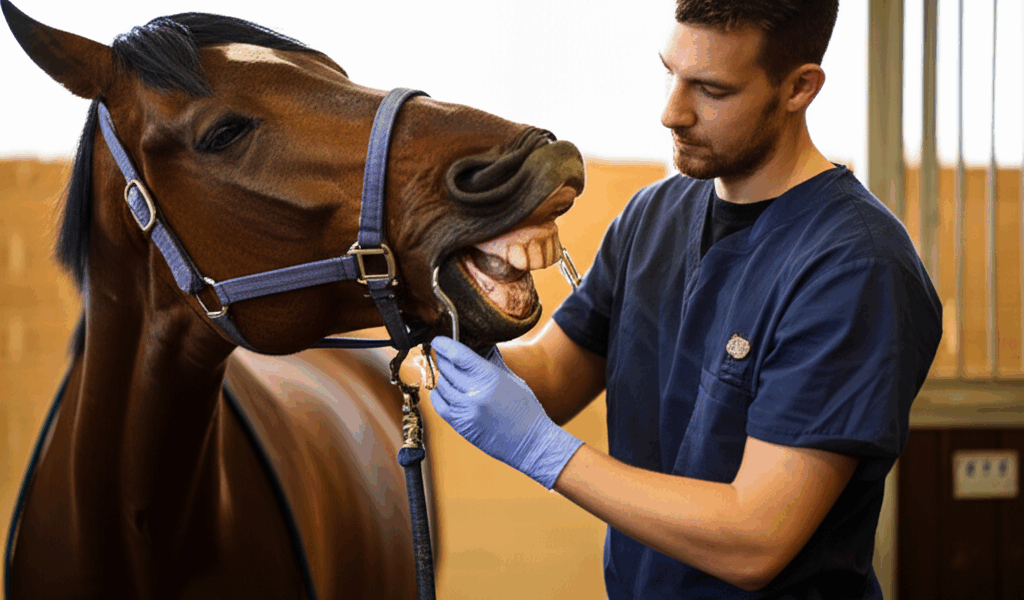
A child should groom a horse only with a knowledgeable adult providing close, hands-on supervision. Start with a quiet, experienced horse in a controlled area, review escape routes and body language before approaching, require closed-toe sturdy footwear, and give the child one simple task at a time. Grooming looks gentle, but any horse can step sideways, bite, strike, pull back, or kick when startled or uncomfortable.
This guide is for an introductory grooming lesson on the ground. It does not replace instruction from a qualified horse professional or the safety rules of your barn, school, or 4-H program.
Child Horse-Grooming Safety Checklist
- Use a calm, healthy, experienced horse that is accustomed to children.
- Choose a quiet, uncluttered, well-lit area with secure footing.
- Have one capable adult assigned to the child and horse.
- Use sturdy closed-toe shoes or boots; secure loose clothing, jewelry, and long hair.
- Keep dogs, food, running children, vehicles, and other distractions away.
- Position tools where neither horse nor child can step on them.
- Stop if the horse, child, or supervisor becomes anxious or distracted.
Pennsylvania 4-H’s guidelines for young beginners place safety first, call for quiet and well-trained horses, and use a one-to-one adult-to-youth ratio during hands-on horse activities. Local programs may have stricter helmet, age, footwear, or supervision rules; follow the rules that apply where you are.
Choose the Right Horse and Location
A child’s first grooming horse should be predictable and comfortable with being handled. “Small” does not automatically mean safer: a poorly trained pony can be harder for a beginner than a calm full-size horse. Ask the horse’s regular handler about sensitive areas, biting or kicking history, difficulty tying, pain, and reactions to brushes or hoof handling.
The workspace should allow the adult to stay beside the child without becoming trapped against a wall, door, or another horse. Remove hoses, lead ropes, forks, buckets, and grooming boxes from walking paths. The supervising adult should know how the horse is secured and should control or monitor it throughout the lesson.
Teach the Approach Before the Brush
- Walk calmly—never run or shout—toward the horse’s shoulder where it can detect the approach.
- Speak quietly and wait for the horse to acknowledge the person.
- Avoid standing directly in front of the head or directly behind the hindquarters.
- Let the adult make the first contact and demonstrate where the child should stand.
- Explain that the child must not duck under the horse’s neck, belly, lead rope, or tie.
Do not teach a child to “prove who is boss.” Safe handling depends on calm positioning, clear boundaries, trained responses, and an adult who recognizes when the situation is becoming unsafe.
Body-Language Signals Children Can Learn
Keep the first lesson simple. A child can learn that pinned ears, a tense muzzle, tail swishing, repeated skin twitching, turning the head toward the handler, lifting a hind leg, crowding, or moving away may signal irritation, discomfort, fear, or flies. One sign does not diagnose the cause. It means pause, create safe space, and let the adult assess.
Relaxed-looking horses still require supervision. Horses react quickly, and a sudden noise or painful spot can change their behavior without warning. Never tell a child that a familiar horse “would never” bite or kick.
A Simple First Grooming Sequence
1. Let the adult demonstrate
Show how to hold the brush, where to stand, and how much pressure to use. The adult should remain within immediate reach rather than supervising from across the aisle.
2. Begin at the shoulder
The shoulder and neck are easier starting areas than the face, belly, flanks, or hind legs. Use a soft brush at first. Ask the child to make slow strokes and watch the horse after each stroke.
3. Work from front toward the rear
Stay close enough to maintain awareness of the horse’s movement, without leaning underneath it. Penn State Extension advises keeping a free hand on the horse when moving around it and avoiding positions directly in front or behind.
4. Change sides safely
Walk around the front at a safe distance directed by the adult, or follow the facility’s taught procedure. Do not crawl under the neck or lead rope. The adult should reposition before the child moves.
5. End before attention fades
A short successful lesson is better than a long one in which the child or horse becomes tired. Put every tool away, praise calm behavior, and review one or two safety lessons.
Which Grooming Tools Should a Child Use?
| Tool | Beginner use | Main caution |
|---|---|---|
| Soft body brush | Good first tool for neck and body | Use gently around sensitive or bony areas |
| Rubber curry | May loosen dirt on fleshy areas | Do not use on the face or lower legs; stop if the horse objects |
| Stiff brush | Adult may introduce after basics | Pressure can irritate a sensitive horse |
| Mane or tail brush | Use only with adult positioning | Never stand directly behind the horse |
| Hoof pick | Advanced beginner task | Requires balance, positioning, and a horse trained to lift feet |
Hoof picking should not be a child’s first independent task. The adult must confirm that the horse stands reliably, demonstrate how to ask for the foot, position the child safely, and control the horse. Never allow a child to sit, kneel, or lie on the ground beside a horse.
Rules for Tying and Holding
Children should not improvise knots or tie a horse to a gate, fence board, machinery, or movable object. Penn State Extension recommends a solid designated tie point and a quick-release or safety knot. If the child has not been formally taught to tie, the adult should secure the horse or have another experienced handler hold it.
Never wrap a lead rope around a hand, arm, waist, or body. Keep slack off the ground, but do not coil it tightly around fingers. What to do if a horse pulls back is an adult handling lesson, not a situation for a child to solve.
When to Stop the Lesson
Stop immediately if the horse crowds, bites, kicks, repeatedly threatens, pulls back, becomes difficult to control, or shows possible pain. Also stop if the child cries, freezes, ignores directions, runs, or cannot stay focused. Move the child to safety first; do not ask them to “push through” fear beside a reactive horse.
If grooming reveals heat, swelling, a wound, marked tenderness, lameness, or unusual behavior, inform the horse’s responsible adult. A veterinarian should evaluate suspected pain or injury. Do not let a child apply medication, feed treats, or perform a procedure without explicit permission and qualified supervision.
Frequently Asked Questions
What age can a child start grooming a horse?
There is no universal age. Readiness depends on the child’s ability to follow directions, the horse, the facility, and the program’s rules. Very young children require one-to-one supervision and a carefully selected horse.
Should a child wear a helmet while grooming?
Requirements vary. Some youth programs require an equestrian helmet whenever children are around horses, including unmounted activities. Follow the barn or program rule and use a properly fitted, currently certified equestrian helmet when required.
Can siblings groom one horse together?
For beginners, one child at a time is easier to supervise and less distracting. Add another child only when there are enough knowledgeable adults and adequate space.
What should a child learn next?
After consistent safe grooming, a qualified instructor can introduce leading, tying, hoof care, and more advanced body-language skills. Our complete beginner horse-grooming guide explains the broader routine and tools.
Sources
- Penn State Extension: Safe ground handling of horses
- Pennsylvania 4-H: Horse Cloverbud safety guidelines
- Extension Horses: Safe ground handling
This article provides general safety education, not individualized instruction. A knowledgeable adult must assess the horse, child, facility, and local program requirements.

Leave a Reply