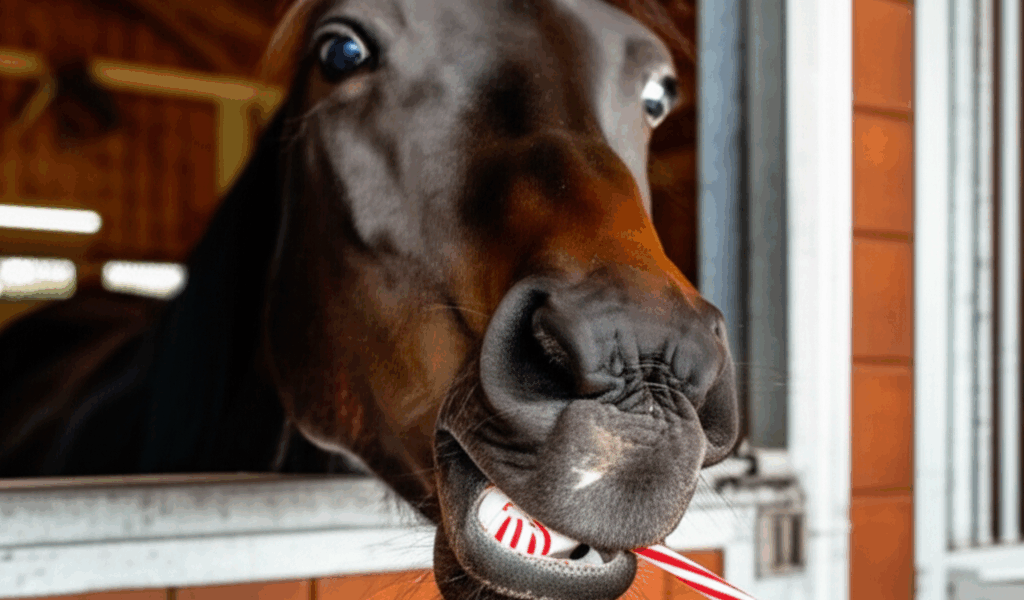
If a horse starts chewing, gaping, tossing its head, crossing its jaw, putting its tongue over the bit, or resisting contact, do not assume it simply dislikes the bit style. Stop escalating equipment and check the mouth, teeth, bit and bridle fit, hands, saddle, workload, and training. A different mouthpiece may help only after pain, injury, and fit problems have been assessed.
A horse can move its mouth normally while accepting a bit, and one behavior does not diagnose pain. The concern is a new, persistent, asymmetric, escalating, or performance-limiting pattern—especially when paired with wounds, blood, swelling, eating changes, headshaking, lameness, or reluctance to be bridled.
Horse Fussing With the Bit: First Checks
- Stop and inspect safely. Check the lips and visible corners of the mouth for rubbing, pinching, swelling, or blood. Do not put fingers inside an unsedated horse’s mouth.
- Review dental care. Note the last veterinary oral examination and any changes in chewing, weight, odor, saliva, feed dropping, or facial swelling.
- Evaluate the entire bridle. Bit width is only one variable; cheekpieces, noseband, browband, throatlatch, headpiece, and attachment points can alter pressure and stability.
- Observe the rider. Fixed, uneven, backward, or inconsistent rein pressure can create conflict even with a suitable bit.
- Look beyond the mouth. Back or neck pain, saddle fit, lameness, fitness, and task difficulty can change how a horse accepts contact.
Do not keep riding to “see if the horse settles” when there is blood, an oral wound, sudden severe resistance, neurologic signs, marked headshaking, or loss of control. Remove the equipment safely and contact the appropriate veterinarian or professional.
Signs That Need Veterinary Dental Attention
The American Association of Equine Practitioners lists bit chewing, tongue lolling, fighting the bit, resisting bridling, head tilting or tossing, poor performance, foul odor, blood, nasal discharge, and facial or oral swelling among possible signs of dental problems. Horses can also have dental disease without obvious signs, which is why a complete veterinary oral examination matters.
University of Minnesota Extension recommends yearly dental checks even when no problem is apparent. Individual horses may need a different schedule based on age and findings. A complete examination is more than looking at the incisors; safe visualization of the cheek teeth and soft tissues commonly requires veterinary equipment and sedation.
Call promptly for:
- Blood, ulcers, cuts, marked swelling, foul odor, or discharge.
- Dropping feed, difficulty chewing, weight loss, excessive salivation, or choke concerns.
- Sudden refusal of the bridle or bit.
- One-sided head carriage, repeated tongue displacement, or unexplained performance loss.
- Behavior that began after trauma, dental work, or a tack change.
What a Bit-Fit Assessment Should Consider
There is no reliable universal rule such as “two wrinkles” or one standard bit width for every horse and design. Mouth conformation varies: tongue volume, palate shape, bar width, lip thickness, dental anatomy, and space inside the mouth all affect comfort. The mouthpiece’s thickness, joints, shape, material, rings or cheeks, and rein attachments change how it moves and where pressure is applied.
| Fit factor | Too little or too small may cause | Too much or too large may cause |
|---|---|---|
| Width | Pinched lips or cheek pressure | Excess side-to-side movement, instability, or rubbing |
| Height | Contact with teeth or low instability, depending on design | Constant lip tension or crowding |
| Thickness | More concentrated pressure | Crowding in a mouth with limited space |
| Joint/design | Changes movement and pressure distribution; suitability depends on anatomy, hands, and intended use | |
| Bridle adjustment | Can pull, pinch, destabilize, or conceal a fit problem elsewhere | |
An independent qualified bit fitter can assess the horse standing and moving, but their work does not replace a veterinary oral examination. For competition, confirm that the precise bit, mouthpiece, cheeks, and use comply with the current discipline’s rules.
Snaffle, Loose Ring, Eggbutt, and Other Designs
“Snaffle” describes direct rein action, not one specific mouthpiece. A loose ring may allow more movement and signal but can be less stable and may pinch if width or guards are inappropriate. Fixed cheeks such as an eggbutt may feel steadier to some horses. Jointed, double-jointed, mullen, ported, and flexible mouthpieces interact differently with the individual mouth.
These are mechanical differences, not a ranking from kind to severe. A supposedly mild design can be painful when too narrow, too thick for the available space, used with rough hands, or combined with a tight noseband. A stronger-looking design is not automatically the cause of every resistance. Evaluate the complete horse-rider-equipment system.
Why Simply Switching Bits Can Mislead You
A horse may appear better immediately because the new bit changes pressure, stability, novelty, or rider confidence. That short response does not prove the underlying cause. Dental pain, an oral lesion, rein tension, saddle discomfort, and training difficulty may still be present.
Changing several variables at once—bit, bridle, noseband, trainer, saddle, and exercise—also makes the result impossible to interpret. After health and fit checks, change one variable, record the setup, and observe it during comparable work with a qualified instructor.
Check the Rider and Training
Contact should not become a tug-of-war. A rider who braces, balances on the reins, uses uneven hands, or asks for work beyond the horse’s strength can produce mouth activity and rein pulling. Video and instruction can reveal patterns that are difficult to feel from the saddle.
Practice rhythm, balance, transitions, steering, and response to light cues at a level the horse can perform. Do not use a tighter noseband to close the mouth around unresolved discomfort. FEI’s welfare work specifically recognizes the importance of oral lesions related to bits and rider aids, and its current rules also regulate noseband tightness and prohibited practices in competition.
For a broader discussion of bracing and contact, see our horse pulling on the reins guide. That behavior also warrants health, tack, rider, and training assessment.
A Safe Bit-Change Process
- Record the current bit, size, mouthpiece, cheeks, bridle settings, and observed behavior.
- Obtain a veterinary oral examination if signs are new, persistent, painful, or the dental status is unknown.
- Have the saddle, bridle, and bit assessed by appropriate professionals.
- Choose one well-reasoned change; do not buy a collection based on testimonials.
- Test first from the ground and then in a controlled riding area with qualified help.
- Compare the same simple tasks and watch the horse both standing and moving.
- Stop for wounds, blood, escalating distress, unsafe behavior, or loss of normal function.
- Reassess rather than moving automatically to a more restrictive or leveraged option.
When Bitless Is—and Is Not—the Answer
Bitless equipment removes a mouthpiece but still applies pressure to the head and can be severe when poorly fitted or used. It may be appropriate for some horses with professional guidance, permitted use, and suitable training. It is not a substitute for treating dental pain, checking the saddle, or developing steering and stopping responses.
Before changing, confirm legal requirements for roads, trails, facilities, insurance, and competition. Introduce unfamiliar equipment in an enclosed area rather than testing control in traffic or open country.
Frequently Asked Questions
Why does my horse chew the bit constantly?
Possible contributors include normal exploration, mouth discomfort, dental disease, unstable or unsuitable fit, rein tension, anxiety, and learned behavior. Persistent or new chewing requires a systematic assessment rather than a single diagnosis.
Does one or two wrinkles mean the bit fits?
No single wrinkle rule accounts for every mouth and bit design. Use it only as one observation and obtain an anatomy- and design-specific assessment.
Is a thicker bit always softer?
No. Thickness can spread pressure but may crowd a horse with limited oral space. Material, shape, leverage, fit, hands, and mouth anatomy all matter.
Should I tighten the noseband if the horse opens its mouth?
Not before investigating pain, dental health, bit and bridle fit, and rein use. Restricting the visible behavior can conceal the cause and create additional pressure.
How often should a horse have a dental exam?
AAEP and University of Minnesota owner guidance support regular veterinary dental examinations, commonly at least yearly for mature horses, with frequency individualized by age, history, and findings.
Sources
- AAEP: Introduction to Equine Dentistry
- AAEP: Recognizing Equine Dental Problems
- University of Minnesota Extension: Caring for Your Horse’s Teeth
- FEI: Choosing and Fitting a Jointed Mouthpiece
This article is general education, not a diagnosis, tack fitting, or training prescription. Use an equine veterinarian and qualified hands-on professionals for the individual horse.



Leave a Reply