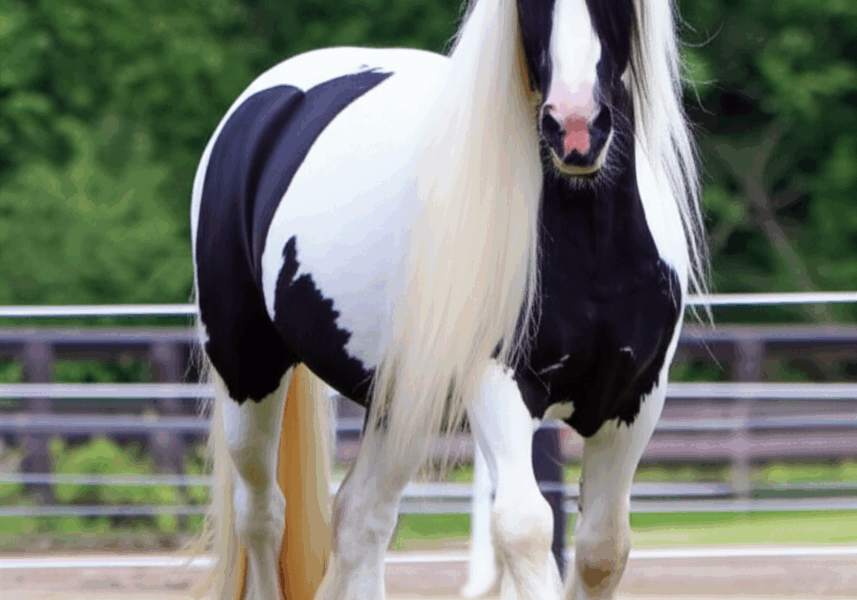
How much does a Gypsy Vanner horse cost? In a July 2026 snapshot of publicly priced U.S. Gypsy Vanner listings on DreamHorse, asking prices ranged from $5,500 to $40,000. Most of the visible, publicly priced examples in that snapshot fell roughly between $8,000 and $22,500. Those figures are asking prices—not verified final sale prices—and they can change as listings are added, removed, or negotiated.
The purchase price depends far more on the individual horse than on the breed name alone. Age, training, temperament, soundness, registration, pedigree, reproductive status, location, and suitability for a buyer’s intended job can move the price substantially. A green youngster and a proven, safe riding or driving horse should not be compared as if they were interchangeable.
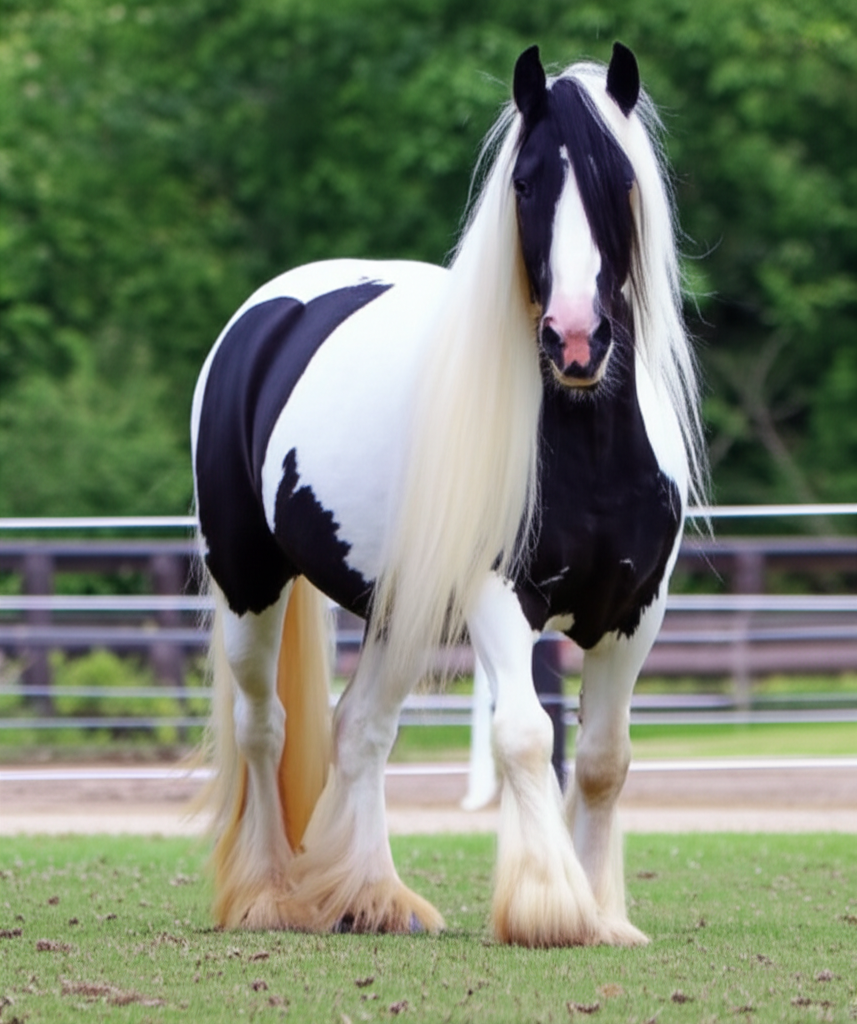
Current Gypsy Vanner asking-price snapshot
The following examples were visible in U.S. listings checked in July 2026. They illustrate the market’s spread; they are not an appraisal or a promise that another horse will sell for the same amount.
| Listed horse | Age/type described | Asking price |
|---|---|---|
| 2023 piebald gelding | Ready to be started | $5,500 |
| 2025 black colt | Young prospect | $8,500 |
| 2026 foals | Several colors and sexes | $9,000–$15,000 |
| 2023 trained geldings | Advertised as trained | About $15,000 |
| 2011 trained gelding | Advertised as safe and broke to ride | $17,500 |
| 2020 gelding | Adult riding prospect | $22,500 |
| 2022 gelding | Advertised as family-safe, with radiographs | $40,000 |
Method: We reviewed the publicly displayed Gypsy Vanner results on DreamHorse in July 2026 and recorded representative U.S. listings with visible dollar amounts. Private-treaty and auction listings without a public final price were excluded. Because advertisements describe horses differently and the final negotiated amount is usually private, this is a market snapshot rather than a statistical average.
Why one Gypsy Vanner costs more than another
Training and proven behavior
Training often explains more of the price difference than color. An unstarted youngster requires time, professional help, and carries uncertainty. A mature horse that has safely performed the buyer’s intended work—trail riding, driving, dressage, therapeutic work, or showing—may command substantially more.
Do not pay a premium for labels alone. “Beginner-safe,” “bombproof,” and “family horse” are marketing descriptions, not guarantees. See the horse handled, caught, groomed, loaded, ridden, or driven in realistic conditions. If possible, have the intended rider try the horse with an appropriate professional present.
Registration and identity
The Gypsy Vanner Horse Society (GVHS) maintains studbooks, registration rules, and DNA-based pedigree records for the breed. GVHS explains that generic terms such as “Gypsy cob” or “Gypsy horse” are not automatically equivalent to a registered Gypsy Vanner. The society also states that it does not register crossbreds.
Before assigning value to registration, compare the horse’s markings and identifying information with the original certificate. Confirm that the seller is the owner of record and that the transfer documents can be completed. The GVHS transfer form calls for the original registration certificate, ownership documentation, and a transfer fee. Contact the registry directly when a certificate, pedigree, or seller claim is unclear.
Age and reproductive status
Foals and young prospects may cost less than proven adults, but their eventual height, movement, temperament, and suitability are less certain. A breeding mare or stallion should not receive a premium merely because it is intact. Buyers should verify registration, parentage, reproductive history, health testing, and whether the animal actually fits a responsible breeding program.
Soundness and intended use
A horse’s value is inseparable from what the buyer needs it to do. A finding that is acceptable for light pleasure use may matter greatly for demanding sport or breeding plans. The American Association of Equine Practitioners recommends a purchase examination tailored through communication between the buyer and veterinarian.
Use a veterinarian who represents you, the buyer. A pre-purchase examination helps document health and soundness on that day, but it is not a guarantee of future performance and does not itself determine the horse’s value or suitability.
Location, transport, and import status
A distant bargain may stop being a bargain after hauling, layovers, health paperwork, insurance, and professional evaluation. Obtain a written transport quote before making a nonrefundable commitment.
Importing from another country is more complex than adding one flat shipping estimate. USDA APHIS says importers are responsible for applicable port inspection, quarantine, laboratory testing, and other costs, and that diagnostic testing is separate from quarantine fees. Requirements depend on origin, sex, age, and travel history. Ask an experienced equine import broker and review current USDA requirements for the exact horse and route.
Costs beyond the purchase price
The sale price is only the entry cost. Build a first-year budget before shopping. It should account for:
- the pre-purchase examination and any agreed imaging or laboratory work;
- transport, health certificates, and possible overnight stops;
- board or property expenses;
- forage, feed, salt, and supplements actually required by the ration;
- routine veterinary care, dentistry, vaccination, and parasite-control planning;
- farrier care on the schedule appropriate for that horse;
- tack fitting, safety equipment, and training;
- mortality, major-medical, or liability insurance where appropriate;
- an emergency reserve.
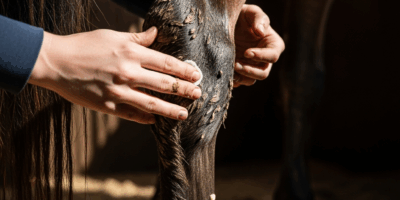
Long feathering and a heavy mane and tail may add grooming time, but avoid assuming every Gypsy Vanner needs a fixed monthly “feather-care” allowance. Skin condition, turnout, climate, management, and product choices differ. Inspect beneath the feathering during the purchase process and ask the veterinarian about any swelling, crusting, irritation, or chronic skin problem.
Use our monthly horse-cost budget to estimate recurring expenses in your area, then add the individual horse’s training, transport, insurance, and health needs.
Questions to ask the seller
- What is the horse’s registered name and registration number?
- Is the seller the owner shown on the original certificate?
- Why is the horse being sold, and how long has the seller owned it?
- What work has the horse performed consistently during the past year?
- Who trained it, and can the buyer speak with that trainer?
- Has it had lameness, choke, colic, skin disease, surgery, medication, injections, or prolonged time off?
- What are its current forage, turnout, farrier, dental, and veterinary routines?
- Will the seller permit an independent pre-purchase examination?
- Can the buyer see unedited video of catching, handling, loading, and the intended ridden or driven work?
- Exactly what is included in the written sale agreement?
How to avoid an expensive mistake
- Match the horse to the job. Buy demonstrated suitability, not only hair, color, or pedigree.
- Verify documents independently. Contact the registry using contact information from its official website.
- Do not skip the purchase exam. Agree with your veterinarian on an exam suited to the price and intended use.
- See the horse in person when possible. If distance makes that impossible, hire an independent local professional and veterinarian.
- Use a written contract. Identify the horse, seller, buyer, price, deposit terms, included equipment, representations, and transfer paperwork.
- Be cautious with urgency. Pressure to wire a deposit before identity, ownership, and the horse itself can be verified is a warning sign.
For context across other breeds, see our horse breed overview and our Friesian horse price guide.
Bottom line
A practical 2026 shopping range for many publicly advertised Gypsy Vanners is in the high four figures through the low-to-mid five figures, but the individual horse determines the real value. In the July 2026 listing snapshot used here, publicly stated asking prices ran from $5,500 to $40,000, with many examples between $8,000 and $22,500. Treat those as current advertisements, not guaranteed sale values.
The better question is not only “How much does a Gypsy Vanner cost?” It is “What will this specific horse cost to verify, transport, maintain, train, and keep healthy—and has it already demonstrated the job I need?”
Sources and date checked
- DreamHorse: U.S. Gypsy Vanner listings (asking-price snapshot checked July 2026)
- Gypsy Vanner Horse Society: breed and registration FAQs
- Gypsy Vanner Horse Society: registration rules
- American Association of Equine Practitioners: Don’t Skip the Purchase Exam
- USDA APHIS: importing live equines into the United States
Prices and advertisements change. This guide is educational and is not an appraisal, veterinary opinion, or guarantee of market value.


Leave a Reply